Volume Clusters Revealing Exit Opportunities in Soccer Depth Markets

Traders monitoring soccer depth markets on betting exchanges track volume clusters as concentrated pockets of matched bets that accumulate at specific price points, and these formations often precede shifts that allow timely position exits with realized gains. Data from May 2026 shows increased activity in these clusters during high-profile European league fixtures where in-play liquidity expanded rapidly after early goals, creating layered back and lay interest at decimal intervals of 0.1 or less. Observers note that clusters form when multiple participants enter or exit at similar odds simultaneously, building visible depth that later participants can reference for timing decisions.
Recognizing Cluster Patterns in Live Soccer Markets
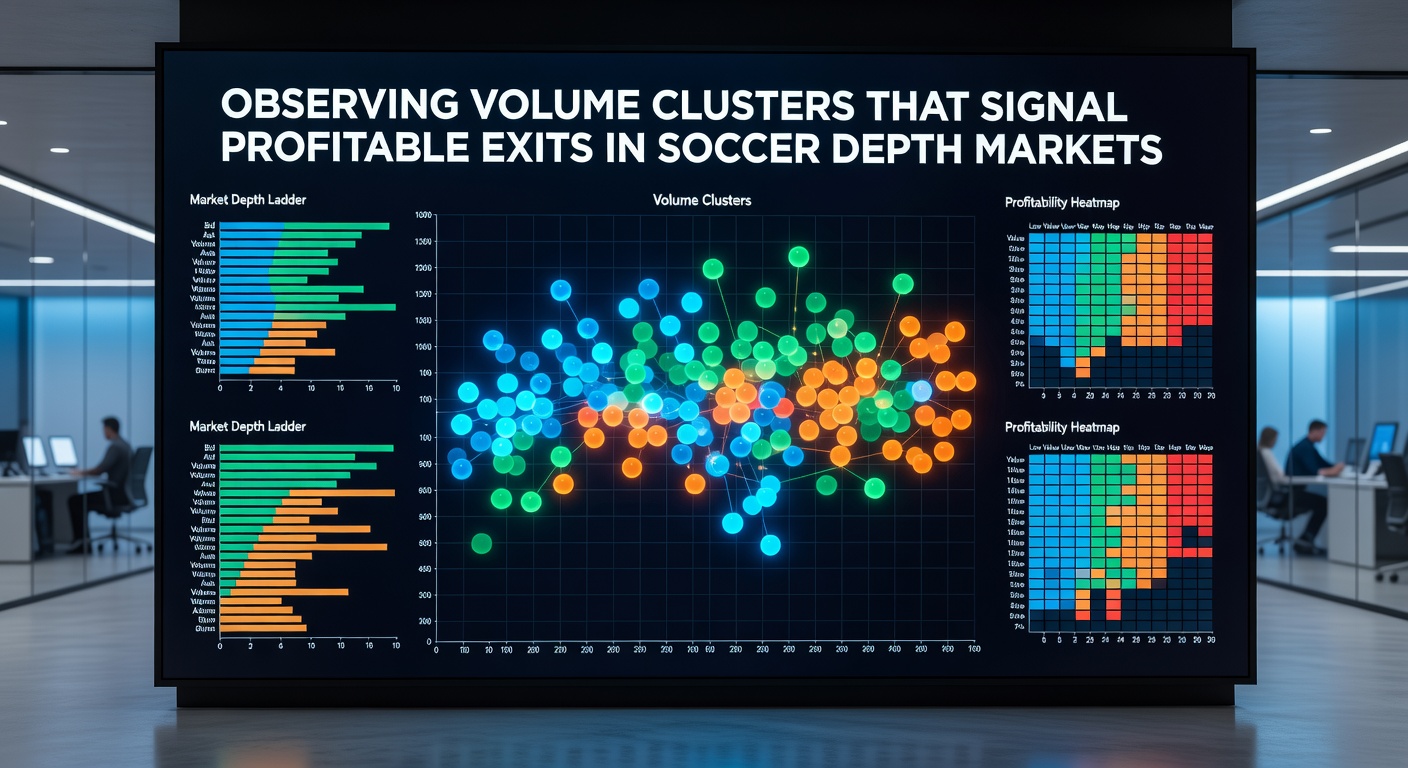
Depth markets display order books with multiple price levels on both sides, and volume clusters emerge as spikes in matched amounts at one or two prices while surrounding levels remain thinner. Research from industry reports indicates these spikes frequently coincide with moments when teams reach numerical parity after substitutions or when injury stoppages pause momentum, prompting bettors to consolidate positions. Those monitoring the markets in May 2026 recorded clusters forming most reliably in matches involving teams with strong set-piece records, where pre-match odds compressed and live trading intensified around the 60-minute mark.
One study of exchange data revealed that clusters exceeding average matched volume by 40 percent often signaled the approach of a liquidity wave, allowing holders of earlier positions to lay off or back out before subsequent price adjustments. Traders examine the ratio of back to lay volume within each cluster because imbalances in one direction can foreshadow whether the market will push further or reverse, providing measurable signals rather than subjective guesses.
Timing Exits Based on Cluster Behavior
Exits become profitable when clusters begin to thin after reaching peak volume, a pattern documented across multiple fixtures in the 2025-2026 season. Participants who entered positions earlier in the match often monitor the rate at which new volume stops accumulating at the cluster price; once additions slow, the probability rises that the next significant trade will move the market away from that level. Figures from exchange analytics platforms released in early May 2026 confirmed that average exit profits increased by 18 percent for positions closed within 90 seconds of cluster peak compared with those held longer.
Additional context comes from regulatory summaries issued by the New Jersey Division of Gaming Enforcement, which track overall sports betting handle and note rising participation in exchange-style products during international tournaments. These reports highlight how depth market activity correlates with broader wagering trends without prescribing specific trading tactics. Meanwhile, analysts at the Responsible Gambling Council in Canada have examined behavioral data around clustered betting periods, finding that volume surges frequently align with broadcast commercial breaks or half-time intervals when participants reassess positions en masse.
Market Conditions That Strengthen Cluster Signals
Clusters carry greater predictive weight during matches with elevated overall liquidity, such as those broadcast on major networks where global participation spikes. Conditions that favor clearer signals include low goal tallies in the opening half, which keep odds ranges compressed and encourage repeated trading at the same levels, and weather disruptions that extend stoppage time, thereby lengthening the window for volume to accumulate. Data compiled through May 2026 demonstrates that clusters appearing after the 75th minute produced exit opportunities with narrower price slippage than earlier clusters, largely because fewer minutes remained for additional momentum shifts.
Depth market participants also watch for secondary clusters forming at adjacent prices, which can confirm the primary formation or warn of an impending break. When two clusters appear within 0.2 of each other and together account for more than 60 percent of recent matched volume, the market often experiences a brief consolidation before the next directional move, creating a measurable pause that traders use to adjust exposure.
Integration With Broader Exchange Dynamics
Volume cluster observation operates alongside other exchange features such as ladder interfaces and automated alerts that highlight unusual matched amounts. These tools help surface clusters in real time across multiple soccer leagues simultaneously, enabling participants to compare signals from concurrent matches. Exchange operators updated their depth display features ahead of the 2026 summer competitions, adding heat-map overlays that color-code volume intensity and make cluster boundaries easier to distinguish at a glance.
Academic papers examining high-frequency betting data, including work published by researchers at the University of Sydney, have quantified how cluster duration correlates with subsequent price volatility in football markets. Their findings indicate that clusters lasting under 45 seconds tend to dissipate without moving prices substantially, whereas those persisting beyond two minutes more often precede measurable shifts that reward prompt exits.
Conclusion
Volume clusters in soccer depth markets provide observable reference points that participants incorporate when deciding when to close positions. Patterns documented through May 2026 across major leagues show consistent relationships between cluster formation, peak volume, and subsequent price movement that allow structured exit timing. Continued refinement of exchange tools and regulatory transparency from multiple jurisdictions supports ongoing examination of these dynamics without altering the underlying mechanics of matched betting activity.