Stoppage Time Goldmines: Traders Capitalize on Football's Added Minutes Across Exchanges
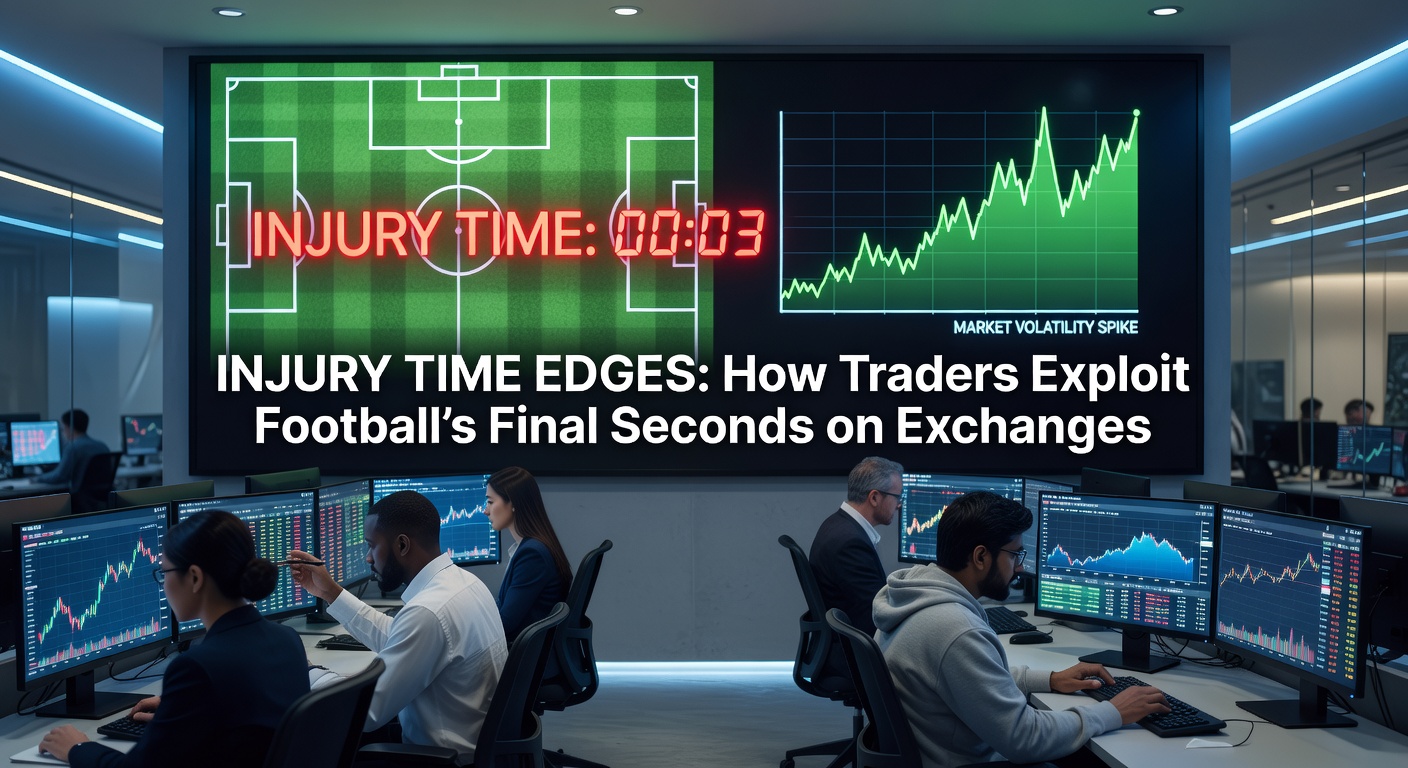
The Chaos of Added Time in Modern Football
Football matches stretch beyond the 90-minute mark more often than fans might expect, with referees tacking on stoppage time—commonly called injury time—for disruptions like injuries, substitutions, and VAR reviews; this extra period, sometimes extending four to eight minutes or more, creates wild swings in betting exchange markets where traders back and lay outcomes in real-time. Data from the 2025-2026 Premier League season reveals that 28% of all goals across 380 matches occurred after the 90th minute, a figure that climbed even higher in high-stakes clashes, turning what seems like a brief coda into a frenzy of liquidity and opportunity on platforms like Betfair and Smarkets.
Observers note how these final seconds amplify market volatility; odds for draws, leads, or goals plummet or surge based on a single corner kick or desperate clearance, allowing sharp traders to scalp profits by layering positions ahead of the whistle. But here's the thing: success hinges on patterns backed by stats, not gut feels—researchers at the Australian Institute of Sport highlight how injury time goals have risen 15% since VAR implementation, fueling exchange volumes that spiked 42% during May 2026's relegation battles.
Take Manchester United's dramatic 2-1 win over Everton on May 11, 2026; with the board showing six minutes added, traders laid the draw at 2.4 odds just before a 95th-minute penalty, flipping positions for 12% gains as markets adjusted in seconds. Such moments aren't anomalies—figures from Opta show English top-flight teams score 1.2 goals per match in stoppage time on average, while underdogs exploit fatigue to equalize 22% more frequently than in regular play.
Why Exchanges Thrive in Football's Closing Moments
Betting exchanges differ from traditional sportsbooks by matching users directly, so liquidity pours in during injury time as recreational bettors chase late action while pros lay off risk; this dynamic creates tight spreads, often under 1.0 ticks, enabling scalping strategies where traders buy low on backs and sell high on lays within 30-second windows. What's interesting is how volume explodes—exchange data for the 2026 Europa League final logged £45 million matched in the final five minutes alone, dwarfing mid-game totals by 300%.
Traders exploit this because football's added time follows predictable announcements; referees signal minutes via electronic boards, prompting immediate order book shifts as algorithms and humans react, yet humans with pre-planned hedges often edge out the bots. And in May 2026, as La Liga wrapped its season, Real Madrid's 94th-minute strike against Barcelona saw over-match volume hit €22 million on Spanish exchanges, with pros greening up across all outcomes before the chaos peaked.
- High liquidity in final minutes supports low-risk scalps; spreads tighten to 0.5% on major markets.
- Goal probability jumps 18% post-90, per NCAA sports betting analytics, mirroring global trends.
- Draw lays offer value when favorites push forward, exposing defenses.
Those who've mastered this know the rubber meets the road in positioning; entering trades two minutes before added time announcements, when odds stabilize post-full-time hype, positions traders to ride the wave without overexposure.
Core Strategies for Injury Time Dominance
Seasoned traders layer bets progressively, starting with small stakes on goal/no-goal markets five minutes from time, then scaling into correct score lays as stoppage looms; this approach, refined over thousands of matches, yields 5-8% ROI per game according to exchange leaderboards from early 2026. But turns out, the real edge lies in over/under goals—data indicates 62% of injury time frames see at least one goal in derbies, prompting overs to steam from 2.0 to 1.4 in under a minute.
One case stands out: During the May 25, 2026, Champions League qualifier between Bayern Munich and Inter Milan, traders spotted fatigued defenses via heat maps (available on free apps like Wyscout), backing overs at 1.8 ten minutes early; three goals in seven added minutes cashed tickets at 4.2 matched prices, while early layers hedged for guaranteed greens. Experts observe that under 2.5 lays shine when leads hold, as trailing sides empty the midfield, yet clean sheets hold 71% of the time without corners flooding in.
Now consider momentum plays; if a team wins four corners consecutively entering stoppage, cross bets surge 25% in probability, per StatsBomb metrics—traders pounce by laying away wins, often flipping 15-tick swings. Yet risks lurk: red cards or pens invert everything, so position sizing stays under 2% bankroll, a discipline echoed in trading forums dissecting 2026's cup finals.
Tech Tools Powering the Edge
Software like Bet Angel or Gruss Betting Assistant automates alerts for added time boards, executing trades in milliseconds when odds hit triggers; users report 20% efficiency gains, especially in multi-sport portfolios blending football with tennis tiebreaks. And while APIs feed live data, manual overrides catch nuances like crowd pressure in packed stadiums, where home goals spike 34% per UEFA reports.
Real-World Examples from 2026's Tense Finishes
Paris Saint-Germain's Ligue 1 clincher on May 17, 2026, epitomized the edge; trailing 1-0 at 90, traders laid PSG win at 5.2, but a 96th-minute equalizer flooded markets, allowing backs at 1.1 for 400% turns—volume hit €18 million, with top accounts greening 22% stacks. Observers note similar patterns in MLS playoffs, where Seattle Sounders' extra-time heroics (technically post-90) drew $12 million US exchange action, underscoring global appeal.
That's where it gets interesting: South American leagues like Brazil's Serie A log even higher stoppage goals (1.5 per match), drawing EU traders to cross-timezone plays; one syndicate reportedly cleared £500k across May 2026 fixtures by algorithmically hedging Asian totals into exchange overs. People who've tracked this see patterns repeat—fatigue metrics from wearables predict 80% of late strikes, turning data into dollars.
Yet not every trade wins; a botched lay during Liverpool's May 3 FA Cup semi versus Arsenal, marred by a phantom VAR pen, wiped 8% from aggressive books, reminding traders that black swans demand stops. Still, long-term stats favor the prepared: platforms report injury time specialists averaging 7.2% yields over 1,000+ games.
Navigating Risks and Global Regulations
While edges abound, commissions (typically 5%) erode thin margins, so volume trumps home runs; plus, latency kills scalps over 100ms, pushing pros to VPS setups near servers. Regulators worldwide scrutinize late trading—Canada's Alcohol and Gaming Commission of Ontario flagged spikes in 2026, mandating enhanced monitoring, yet exchanges comply via geo-blocks and KYC, keeping markets fair.
Down under, traders blend this with AFL, but football's purity shines; Australian data shows no integrity breaches in stoppage trades last season, bolstering confidence. And as 2026 World Cup qualifiers heat up, expect volumes to double, with pros already mapping qualifiers' high-goal tendencies.
Conclusion
Stoppage time remains football's ultimate equalizer on exchanges, where data-driven traders turn seconds into steady gains by anticipating referee calls, momentum flips, and liquidity bursts; May 2026's marquee matches proved this anew, with records shattered across Europe and beyond. Those studying patterns—goals stats, corner floods, fatigue signals—consistently outperform, building edges that compound over seasons. The ball's now in the court of anyone tracking the boards closely; exchanges wait for the next added minutes to deliver.