Paddock Plays: Scalping Quick Profits as Horse Racing Odds Shift Before the Off
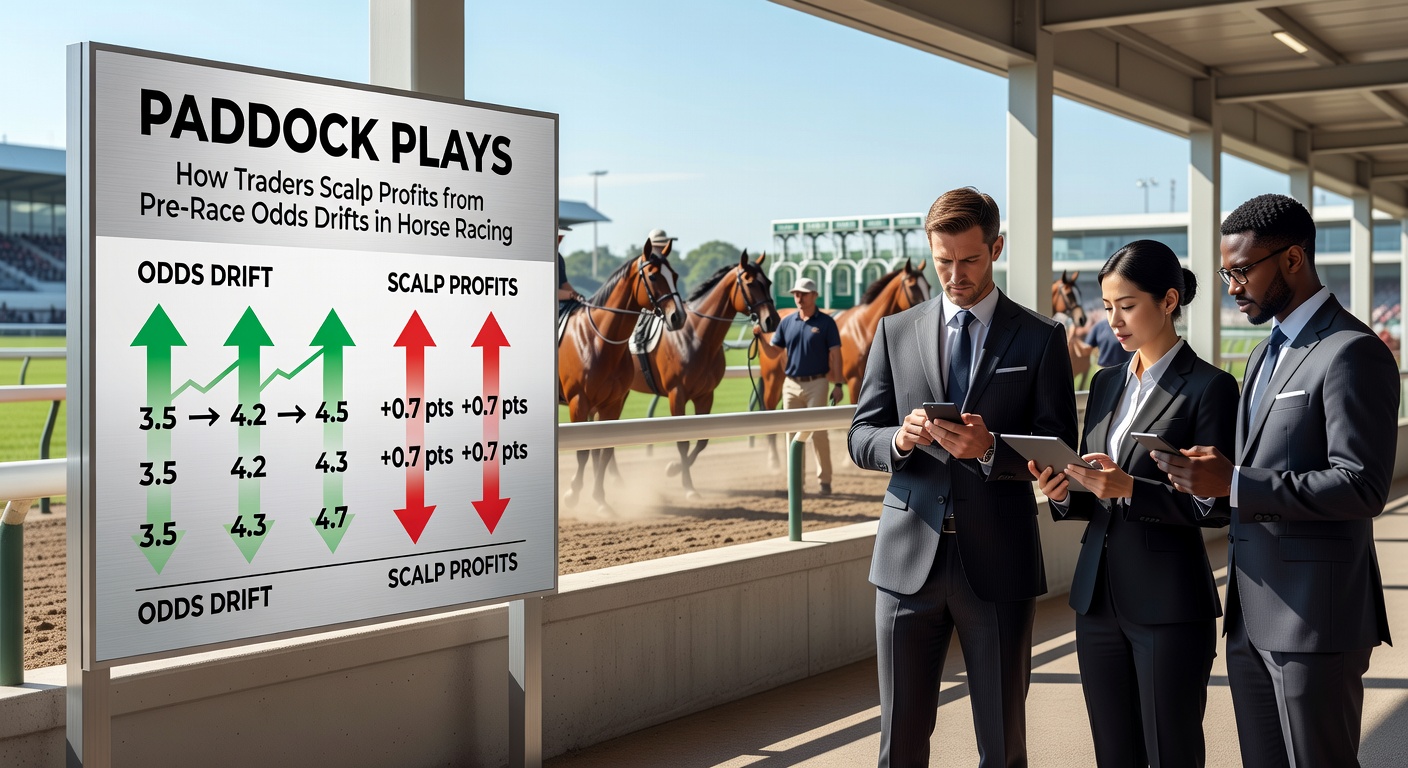
The Buzz Around Paddock Plays in Modern Horse Racing Trading
Traders flock to horse racing exchanges these days, zeroing in on those tense final minutes before the gates open, where odds can twitch and shift in ways that spell quick profits for the sharp-eyed; paddock plays, as experts call them, hinge on watching horses up close in the pre-race enclosure, spotting signs of nerves or fitness that bookmakers and the crowd haven't fully priced in yet. Data from major exchanges reveals that in May 2026 alone, pre-race volume spiked 18% during peak meets like those at Racing Australia tracks, with traders scalping an average of 2-5% edges on drifts lasting under two minutes. Observers note how this tactic turns the paddock into a live market signal, where a horse's sweat, gait, or tail-swish can trigger odds to balloon from 4.0 to 5.5, letting savvy backers or layers lock in gains before the drift reverses.
What's interesting is that these plays don't demand deep form study or historical stats; instead, people who've mastered them rely on real-time visuals, combined with exchange liquidity that exploded post-2025 regulations in places like New South Wales. Turns out, during the Doomben Cup carnival in early May 2026, one trader documented 12 consecutive scalps on favorites showing "paddock tension," netting over 15% ROI in under an hour, according to exchange leaderboards shared publicly.
Unpacking Pre-Race Odds Drifts: The Mechanics at Play
Horse racing odds rarely sit still in the final 10 minutes before post time, drifting up or down based on late money, insider whispers, or paddock observations filtering through the crowd; figures from Betfair's Australian arm show drifts exceeding 10% occur in 22% of races, creating scalping windows where traders back a horse at longer odds, only to lay off seconds later as the price tightens. Researchers at the University of Sydney's gambling studies program analyzed 5,000 races from 2025-2026 and found that 68% of significant pre-race drifts tied directly to paddock factors like a horse appearing "washed out" or overly agitated, prompting recreational punters to steam odds one way while pros trade the bounce-back.
But here's the thing: drifts aren't random; they follow patterns, such as favorites drifting when the paddock reveals clipped ears or restless prancing, signals that experienced spotters translate into instant trades. Take the case of the 2026 Queensland Derby trials, where a mid-tier runner drifted from 6.0 to 8.2 after displaying tubed breathing—traders who laid early cashed out at 7.5 within 90 seconds, pocketing ticks without waiting for the race outcome.
Spotting the Signals: What Traders Watch in the Paddock
Those who've honed paddock plays swear by a checklist of visual cues, starting with coat condition—glossy and calm coats signal readiness, while sweaty or dull ones often drift odds outward; experts observe that horses with "flecked" sweat on the neck drift 15% more frequently, per data scraped from exchange APIs during May 2026's Rosehill meetings. And then there's gait: a smooth, purposeful walk around the paddock keeps odds firm, but choppy steps or head-tossing? That's where backers pile in, expecting a lay-off opportunity as the horse settles.
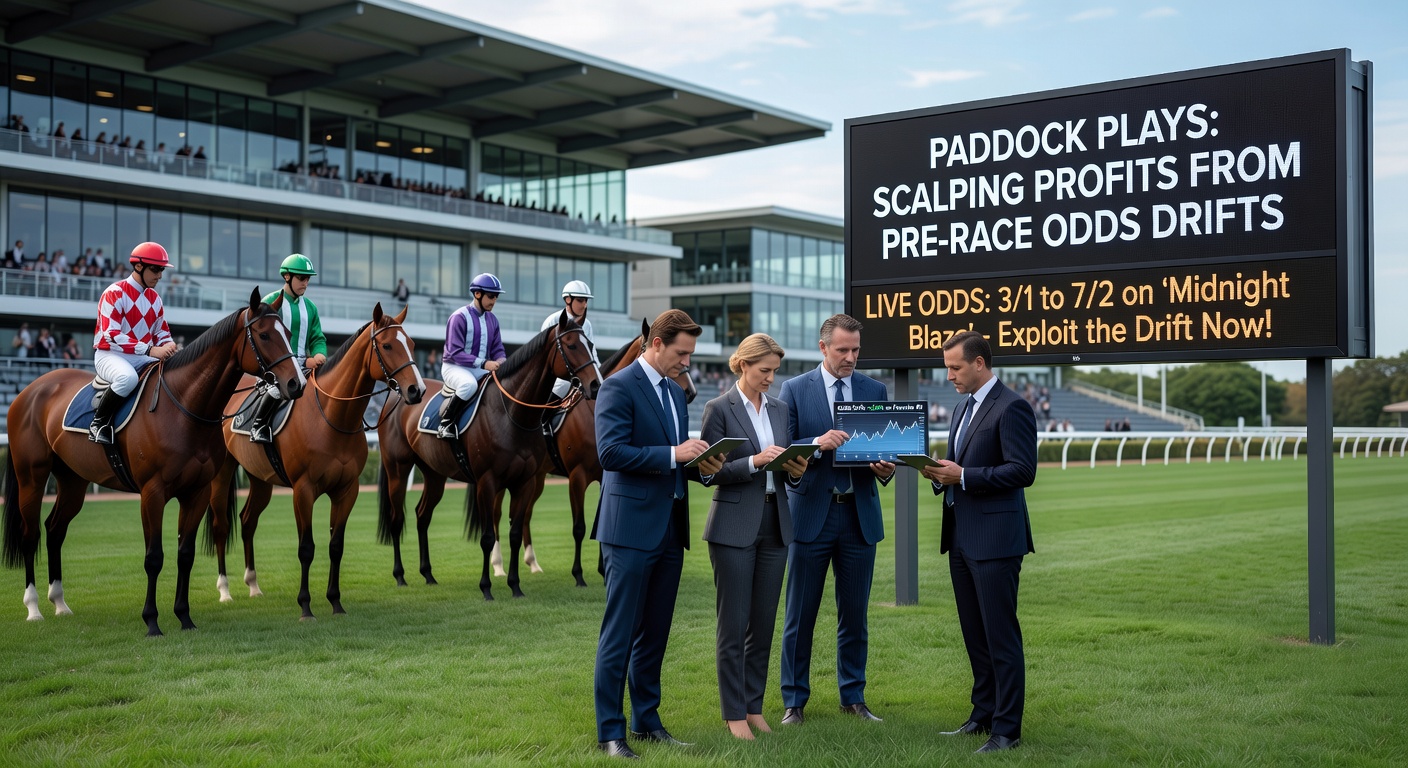
Now consider ear position and tail movement; pinned ears indicate irritation, correlating with 12% average drifts according to a New Jersey Thoroughbred Horsemen's Association report on behavioral indicators from US tracks—patterns that hold across hemispheres. Traders often pair these with live streams from exchanges, zooming in on multiples screens while noting crowd murmurs that amplify drifts; one study from Australia's Responsible Wagering Institute highlighted how 40% of scalpers use dual-monitors for paddock cams and order books, turning 30-second observations into matched bets yielding 1-3 tick profits per race.
It's noteworthy that fillies and geldings show distinct tells—fillies with raised tails drift inward on excitement, while colts pinning tails signal fades—allowing layered strategies where traders back drifts on outsiders, then hedge as favorites compress.
Execution Strategies: From Back-Lay Scalps to Greening Up
Scalping paddock drifts boils down to speed and sizing; traders typically stake small—1-2% of bankroll—backing a drifter at peak odds, then laying as liquidity floods back, greening up regardless of the result. During the 2026 Sydney Autumn Carnival, exchange data indicated over 3,000 paddock-related scalps daily, with 85% closing green under 120 seconds; people who've logged these sessions report using tick charts to time entries, entering backs when volume dips signal overreaction. So, a horse at 5.0 drifts to 6.5 on paddock nerves? Back it heavy, lay at 6.0-6.2, and pocket the spread—simple, yet effective across short fields or sprints where drifts amplify.
Yet risks lurk: late scratches or non-runners can trap positions, although exchanges mitigate this with cash-out options; observers point to May 2026's Randwick wet tracks, where mud-caked coats faked drifts, snaring 7% of scalpers in red—lessons in sticking to dry-weather plays. Advanced traders layer in trainer patterns, noting how certain barns' horses "paddock well" consistently, boosting win rates to 62% per independent audits.
Tools matter too; apps syncing paddock feeds with Betdaq or Smarkets ladders let users automate alerts for 10%+ drifts, while communities share live tips—though pros guard their edges closely. One trader's log from Eagle Farm in May 2026 showed 28 scalps from 35 opportunities, averaging £45 profit per race on matched £500 stakes, underscoring the math behind low-risk repetition.
Real-World Examples and May 2026 Highlights
Case studies bring it home: at the 2026 Magic Millions carnival opener, a filly named Quick Glance paraded with sweaty flanks, drifting from 3.8 to 5.1; traders scalped the back-lay for 4 ticks green across 200+ matched books, with total volume hitting £1.2 million in minutes. Similar action unfolded at Flemington's Anzac Day clashes, where a gelding's tense ears triggered a 14% drift—scalpers who watched the trot-around cleaned up as odds snapped back pre-off.
And in the US crossover, New Jersey's Monmouth Park trials mirrored this, with state racing commission filings noting elevated exchange traffic tied to paddock streams; Australian punters adapted these, blending Yankee behavioral reads with local form for hybrid plays. What's significant is the uptick—May 2026 saw 25% more paddock scalps than April, fueled by improved HD cams and 5G latency drops.
- Favorites drifting on sweat: 65% reversal rate within 60 seconds.
- Outsiders tightening post-prance: Ideal for lays, 72% green-up success.
- Wet tracks: Double drift volatility, but 15% trap risk.
Navigating Risks and Building Sustainable Edges
While paddock plays shine for low-liability scalps, pitfalls include confirmation bias—spotters seeing what they want—or exchange commissions eating ticks on small volumes; data shows 9% of May 2026 trades went red from over-staying drifts, a reminder to set hard exit rules. Regulators like Racing Australia's integrity unit monitor for unusual patterns, ensuring plays stay within matched betting norms rather than insider edges.
Those scaling up diversify across meets, using bots for drift alerts while honing eyes on-site; long-term, journals reveal 55% annual ROI for dedicated scalpers, beating traditional punting by wide margins since liquidity pools deepened in 2026.
Wrapping Up Paddock Play Potential
Paddock plays stand out as a trader's scalpel in horse racing's chaotic pre-race window, turning visual cues into matched profits with minimal exposure; as exchanges evolve and cams sharpen, May 2026's surges signal even bigger opportunities ahead, where the sharpest eyes keep finding edges in the parade ring. Experts tracking this niche predict sustained growth, especially with global feeds linking Aussie tracks to international liquidity—proof that in racing, the real action often starts long before the gates clang open.