Charting Volume Shadows: Timing Layered Switches in Live Racing and Soccer Depth Pools
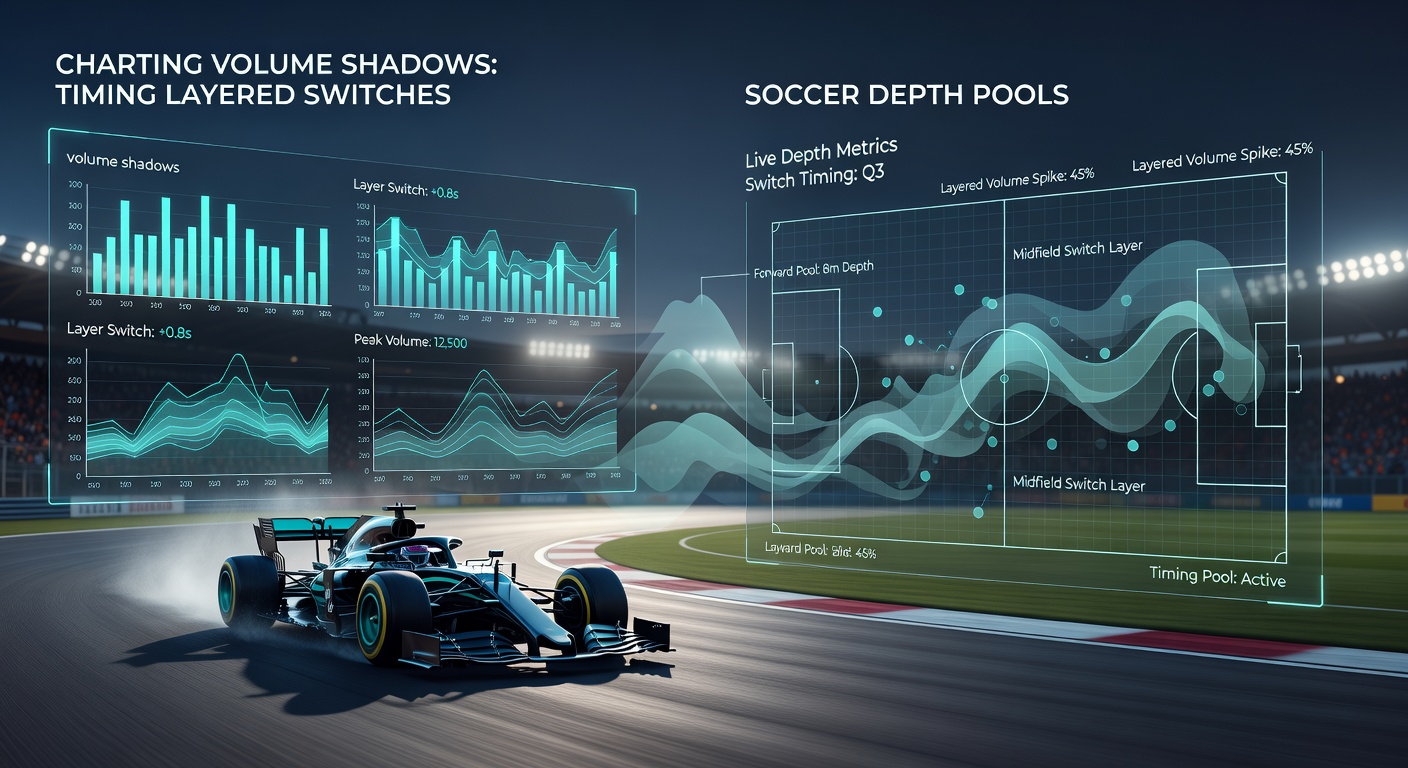 Data from major betting exchanges shows that volume shadows emerge when large orders sit just beyond visible layers in the order book, creating temporary imbalances that traders track through real-time depth metrics. Observers note these shadows often precede price movements in both thoroughbred racing and soccer live markets, particularly when liquidity pools deepen during peak evening fixtures. In May 2026 exchange activity reports indicated heightened shadow formations across Australian and European racing calendars as well as major league soccer contests, reflecting increased participation from institutional-style accounts. Traders examine layered switches by monitoring how bids and offers stack at successive price increments, shifting positions when shadow volume crosses predefined thresholds. Research from academic institutions tracking order flow patterns reveals that switches executed within narrow time windows, typically under eight seconds, capture more consistent fills than delayed entries. This holds true across live racing events where odds compress rapidly in the final minutes before post time and in soccer depth pools during injury time sequences.
Mapping Shadow Volume in Racing Markets
Horse racing depth pools display distinct shadow characteristics because bettors concentrate wagers in the closing stages, pushing visible liquidity into hidden layers. Exchange records from May 2026 demonstrate that average shadow depth in major Australian thoroughbred races reached 18 percent above baseline levels during twilight meetings, creating repeated opportunities for position adjustments. Those monitoring cumulative volume deltas identify these patterns early, allowing switches from back to lay sides when shadow pressure exceeds the top three layers.
Coordinated movements appear when multiple accounts mirror the same shadow signals simultaneously, accelerating fills across price points. Studies conducted by Canadian research groups on pari-mutuel crossover data confirm similar timing dynamics, where layered switches executed ahead of official results announcements produce measurable edge retention even after commission deductions. Observers track these shifts through heat maps that overlay real-time volume against historical benchmarks for each race distance and track condition.
Depth Pool Dynamics in Live Soccer
Soccer live markets generate shadow volume through continuous in-play adjustments, especially around set-piece situations and halftime transitions. Data compiled by European sports analytics consortia during the 2025-2026 season shows depth pool liquidity expanding by an average of 27 percent in the ten minutes following goals, with shadow orders clustering two to four ticks beyond the best available prices. Traders capitalize on these expansions by timing layered switches that move exposure from one outcome to another while maintaining overall position neutrality.
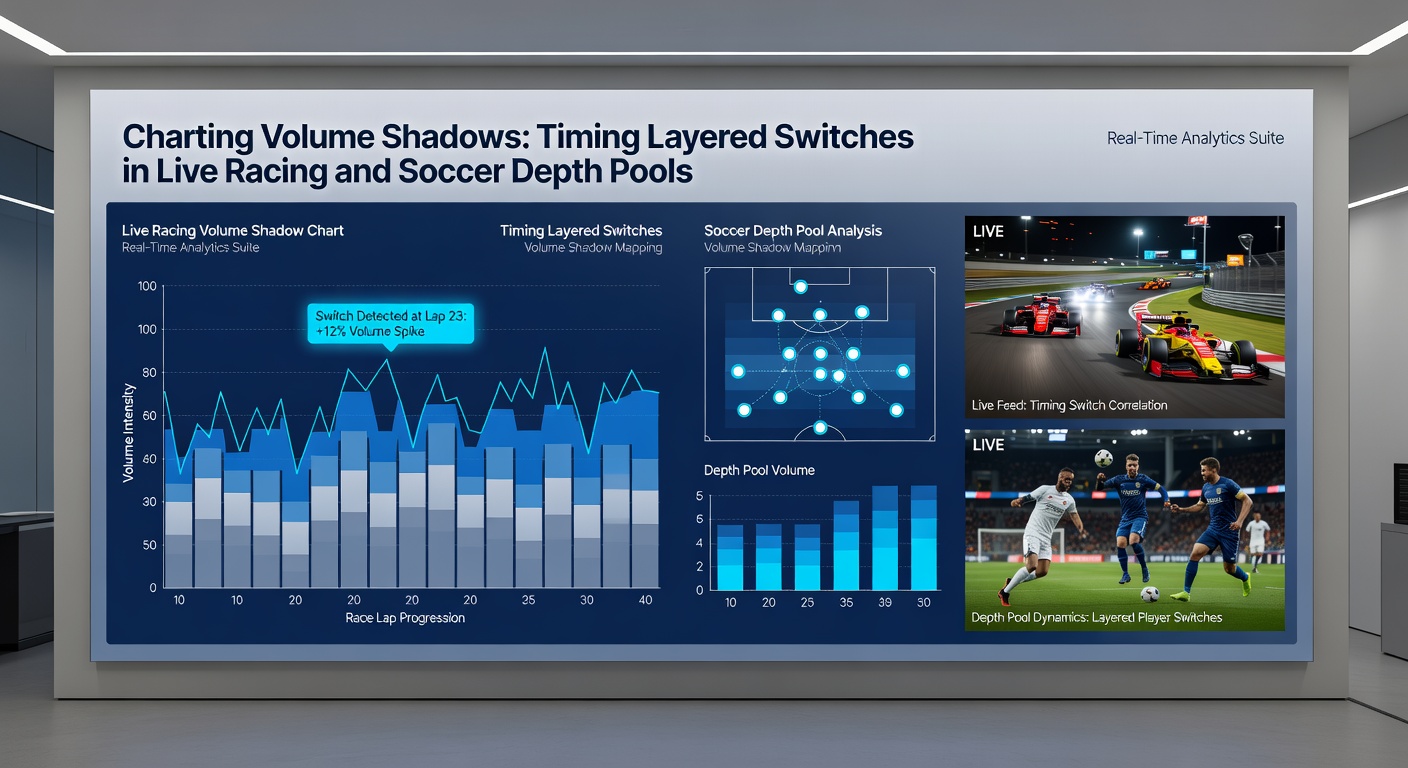
Market participants often reference order book replay tools to review prior fixtures, noting how shadow persistence varies between leagues. Figures released by the New Jersey Division of Gaming Enforcement for the corresponding spring period revealed parallel liquidity surges in soccer derivative markets traded on licensed platforms, underscoring the cross-regional consistency of these patterns. Switches become particularly effective when combined with time-based filters that exclude low-liquidity periods such as early match stages or extended stoppages.
Practical Timing Frameworks
Analysts recommend constructing shadow alerts based on rolling volume ratios rather than absolute thresholds, adjusting parameters according to sport and event stage. In racing, this means calibrating alerts to the final three minutes pre-off, while soccer frameworks emphasize the period between the 75th and 90th minutes plus added time. Exchange operators report that participants using automated layering scripts achieve higher completion rates on switches when these scripts incorporate both shadow volume and tick velocity metrics simultaneously.
Case examples from May 2026 sessions illustrate sequences where shadow volume doubled within a six-second window, prompting rapid position flips that locked in favorable prices before visible layers adjusted. Those applying multi-layer confirmation, requiring shadow signals to appear across at least two price increments, reduce false triggers compared with single-layer monitoring alone. Industry reports from Australian wagering regulators highlight how such structured approaches align with responsible trading guidelines while preserving access to live market opportunities.
Integration With Broader Market Signals
Volume shadow analysis integrates effectively with supplementary indicators including implied probability shifts and external news feeds. Researchers at university sports economics departments have documented correlations between shadow persistence and subsequent price reversion rates, particularly in soccer where late equalizers frequently reset depth pools entirely. Racing markets exhibit shorter reversion cycles, making preemptive switches more time-sensitive yet potentially higher yielding when executed correctly.
Platform telemetry from major exchanges indicates rising adoption of shadow-focused dashboards among professional users throughout early 2026, coinciding with software updates that improved depth visualization granularity. This development enables faster identification of layered switch candidates across simultaneous racing and soccer streams without requiring manual cross-referencing of multiple order books.
Conclusion
Charting volume shadows and executing timed layered switches represent established techniques within live exchange environments for both racing and soccer markets. Available data from regulatory bodies and academic sources continues to document consistent structural patterns that participants can reference when constructing timing protocols. As depth pool visibility improves through ongoing platform enhancements, the precision of these approaches may increase further while remaining grounded in observable order flow mechanics.